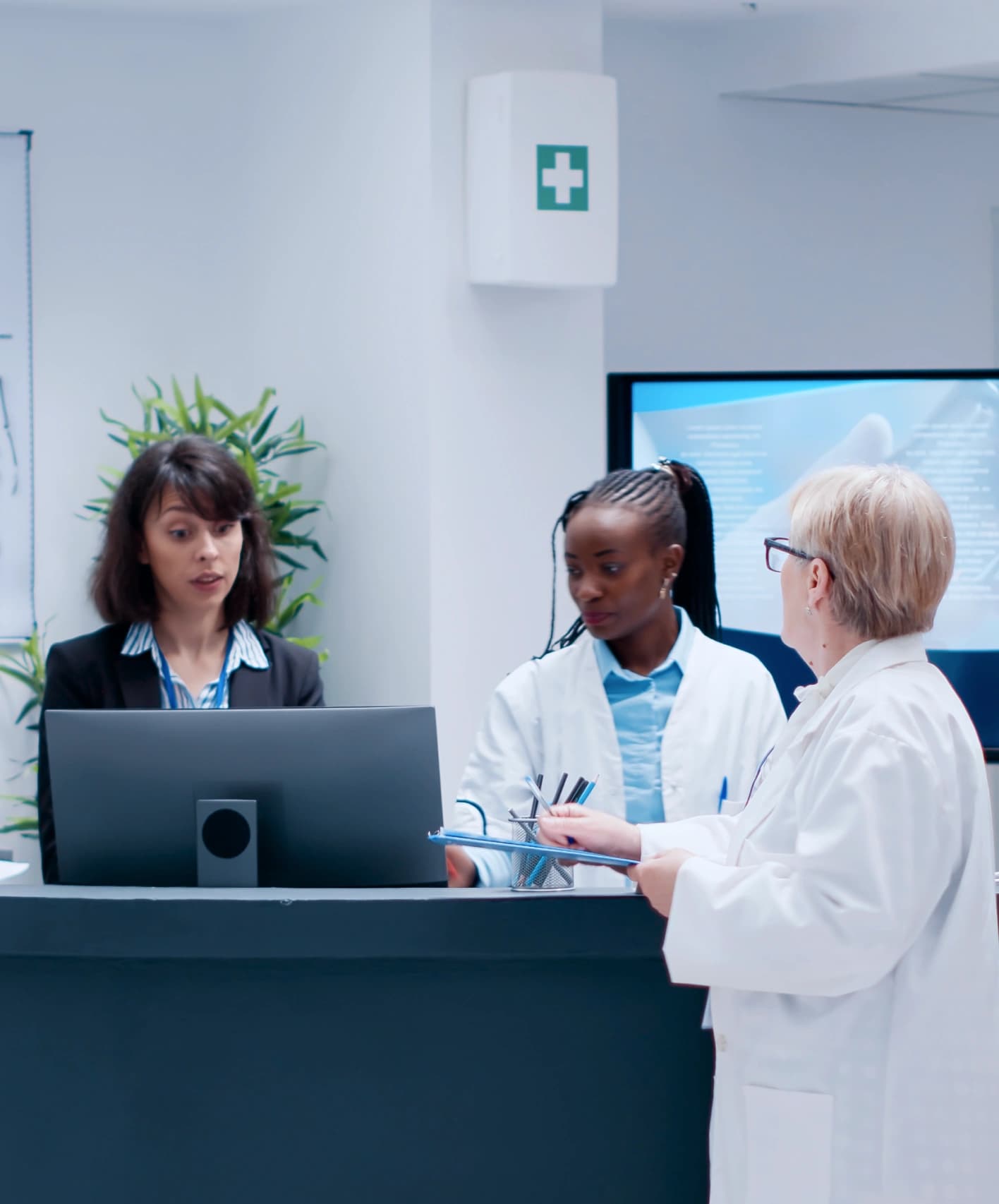
When One Login Stands Between Care and Chaos
In healthcare, systems don’t fail loudly. They fail quietly.
A late-night login. A reused password. Forgotten access. One slip can lock systems, block care, and put patient data at risk. A single weakness can ripple across every connected system.

34%
of healthcare cyber risk stems from credentials.

Small Credential Mistakes.
Serious Clinical Consequences.
Most healthcare disruptions don’t begin with sophisticated cyber warfare.
They start with a single credential error—amplified by complex systems that never sleep.
A single compromised login can:
Lock clinicians out of EHR systems during critical moments
Trigger ransomware that halts admissions or surgeries
Expose patient data and invite regulatory fallout
Force downtime decisions that impact patient safety
4.Force downtime decisions that impact patient safety
1.Lock clinicians out of EHR systems during critical moments
2.Trigger ransomware that halts admissions or surgeries
3. Expose patient data and invite regulatory fallout
4.Force downtime decisions that impact patient safety
1.Lock clinicians out of EHR systems during critical moments
Why Credential Errors Hit Healthcare Harder Than Any Other Industry
Healthcare environments are built for speed—not suspicion.
Clinicians need instant access. IT teams juggle legacy systems, medical devices, and cloud platforms. Third parties rotate in and out constantly.
This creates a fragile reality:
This is why credential risk quietly accumulates—inside well-run healthcare organizations
How We Secure Clinical Access:
How Healthcare Organizations Secure Access Without Slowing Down Care
Modern healthcare security focuses on one principle:Every user, device, and system gets only the access it needs—no more, no less.A single password should never decide patient outcomes.
Secure Identities
Adaptive identity controls stop stolen credentials from reaching clinical systems using platforms like Microsoft Entra ID and IBM Security Verify—without slowing clinicians.
Contain Breaches
Security assumes credentials will be compromised and limits lateral movement across hospital networks using modern firewall and network controls.
Isolate Critical Systems
ICU, imaging, and medication systems are protected through intelligent network segmentation built on secure networking foundations.
Recover and Monitor Continuously
Immutable backups, clean recovery, and 24/7 monitoring enable rapid restoration and early detection before care is disrupted.
The Decision Every Healthcare Leader Eventually Faces
At some point, healthcare leaders face one practical question: Do we manage credential risk internally—or partner strategically?
Partner With
Specialized Security Provider
A focused partner brings:
- • Continuous access monitoring without adding internal headcount
- • Healthcare-specific threat intelligence and response playbooks
- • Proven experience managing credential risks across complex ecosystems
- • Faster detection and containment
Build Everything In-House
An internal team offers familiarity with your environment, but often struggles with:
- • 24/7 monitoring across clinical, admin, and vendor access
- • Keeping pace with evolving healthcare threat patterns
- • Staffing burnout and high turnover
- • Gaps during nights, weekends, and incident surges
Partner With
Specialized Security Provider
A focused partner brings:
- • Continuous access monitoring without adding internal headcount
- • Healthcare-specific threat intelligence and response playbooks
- • Proven experience managing credential risks across complex ecosystems
- • Faster detection and containment
Build Everything In-House
An internal team offers familiarity with your environment, but often struggles with:
- • 24/7 monitoring across clinical, admin, and vendor access
- • Keeping pace with evolving healthcare threat patterns
- • Staffing burnout and high turnover
- • Gaps during nights, weekends, and incident surges
Build Everything In-House
An internal team offers familiarity with your environment, but often struggles with:
- • 24/7 monitoring across clinical, admin, and vendor access
- • Keeping pace with evolving healthcare threat patterns
- • Staffing burnout and high turnover
- • Gaps during nights, weekends, and incident surges
Partner With
Specialized Security Provider
A focused partner brings:
- • Continuous access monitoring without adding internal headcount
- • Healthcare-specific threat intelligence and response playbooks
- • Proven experience managing credential risks across complex ecosystems
- • Faster detection and containment
Why Healthcare Leaders Choose Us
- A single credential mistake can bring critical care to a halt.
- We make sure your teams stay connected—and your systems stay secure—without slowing patient care.
We focus on:
1
Security expertise built specifically for healthcare environments
2
Continuous monitoring across all clinical and administrative systems
3
Rapid response before downtime affects care delivery
4
Security expertise built specifically for healthcare environments
5
Continuous monitoring across all clinical and administrative systems

Reliable systems in the background, so patient care never stops.
Sign up for our Newsletter